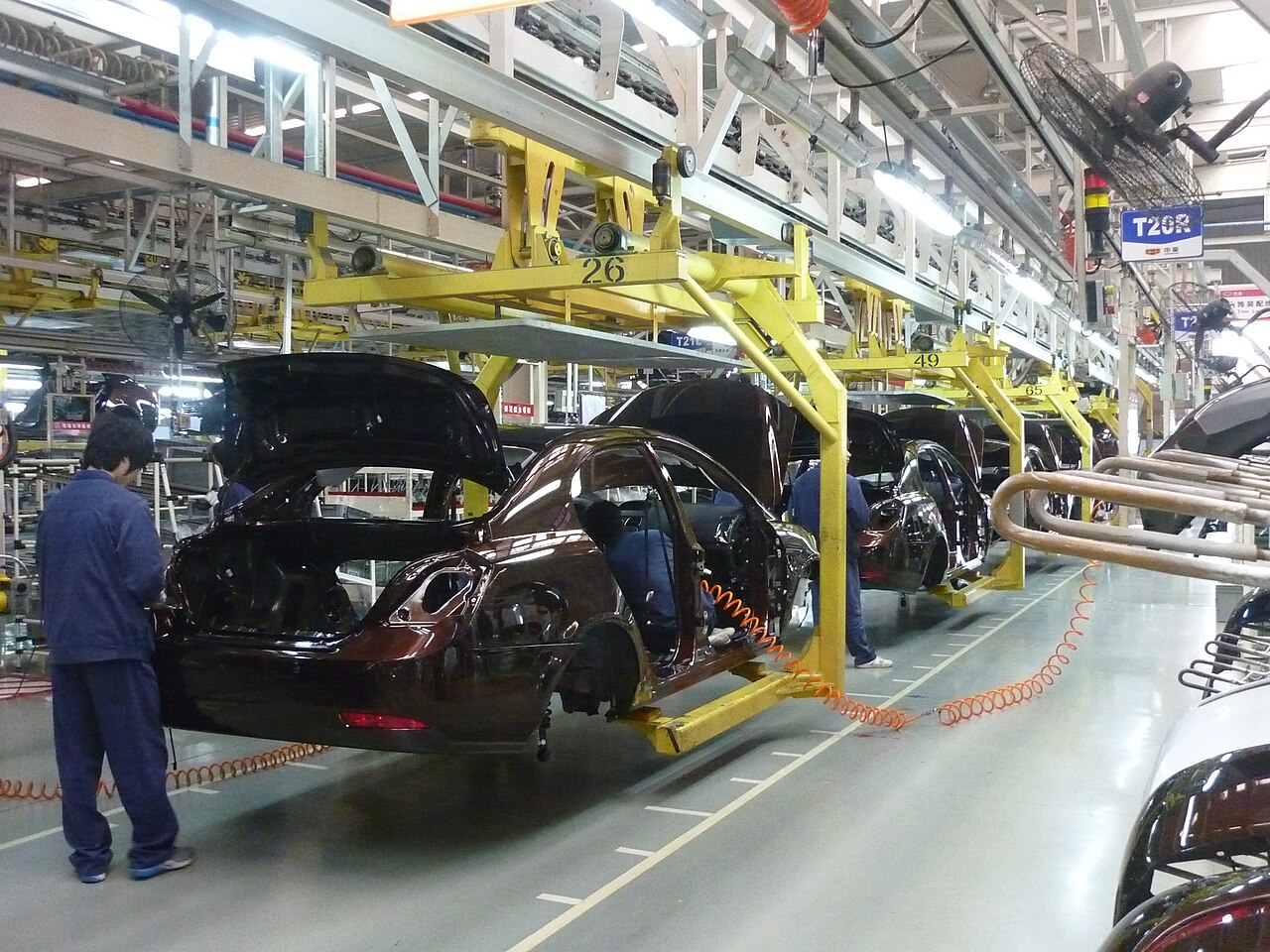
China's passenger-car market contracted sharply in August even as electrification kept gaining ground. CPCA data show retail volume of 1.626 million units, down 19% year on year though up 11% from July, while wholesales to dealers slipped 5% to 2.369 million. New-energy vehicles accounted for 1.069 million of those retail sales — 4% fewer than a year earlier — yet their share of the retail mix hit a record 65.7%.
Domestic supply-chain and Sino-German cooperation headlines filled out the rest of the home section. Horizon Robotics' Journey-series driver-assistance chips have now shipped more than 15 million units in total, with design contracts covering roughly 500 models and a backlog above 20 million; in the first half of 2026 it held 31.94% of China's driving-chip market, edging past Nvidia's 29.38%. Audi and SAIC are setting up a roughly 300-person joint innovation center in Shanghai for AI cockpits, next-gen driver assistance and intelligent EVs, planning four models on a new platform with the first debuting in 2028 under a 49-41-10 equity split among SAIC, Audi and Volkswagen Group China. Xiaomi Auto, meanwhile, used the IFA show in Berlin to sign non-binding memoranda with eight German dealer groups as it prepares a 2027 European entry, displaying the SU7 Max and SU7 Ultra on site.
Tesla staged a launch event in Austin for the production Cybercab, a two-seat robotaxi with butterfly doors and neither a steering wheel nor pedals. Musk celebrated the rollout on X as "a Cybercab storm"; by Wednesday night Texas had 420 Teslas registered for driverless operation, with roughly 200 more vehicles in other cities cleared to run with no one on board. The model entered production at the Texas factory in April, but Musk cautioned that the ramp-up will be slow and meaningful revenue is unlikely before 2027.
The briefing also rounded up AI stories beyond the car world: Google DeepMind's WeatherNext 3 forecasting model is now built into Search and Maps; OpenAI's newly pushed GPT-6 Astra is its first model rated capable of autonomously finding unknown software flaws and writing working exploits, scoring 72.6% on the OSWorld 2.0 desktop benchmark; and trading firm Jane Street signed a five-year, roughly $13 billion GPU compute deal with data-center operator Crusoe.