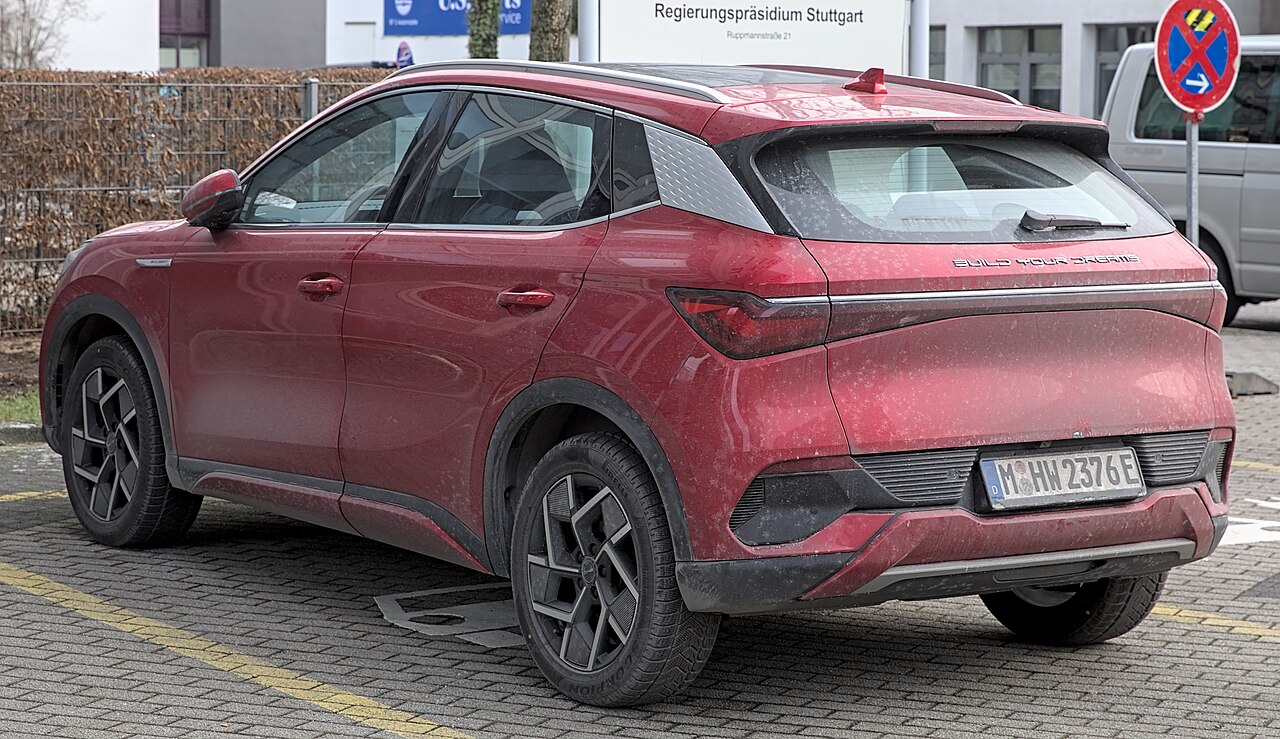
BYD says its Camaçari complex in Bahia, Brazil, has built more than 150,000 vehicles since production began. The plant currently employs about 9,000 people directly, runs two shifts and produces roughly 600 to 700 cars a day. New stamping, welding and paint facilities are now entering testing, allowing the site to take on more of the manufacturing process than final assembly alone.
The plant initially received vehicles in large, partly assembled kits from China. It has recently begun switching to a parts-by-parts process, with more components installed in Brazil. That change increases local work but does not, by itself, make imported parts Brazilian-made. The new facilities will let BYD stamp body panels, weld them into vehicle structures and apply corrosion protection and paint before final assembly.
BYD is targeting 50% local content by January 2027. At 35%, its vehicles could qualify for exports under Mercosur rules, with initial shipments planned for the middle of next year after Brazilian demand is met. The completed complex is expected to cover about 2 million square meters and include 17 partner industrial units. Battery packs are already assembled at the site, though their cells come from China. The company says more than 400 suppliers have been approved and another 250 are under discussion.
The next manufacturing steps are also important for the Mako pickup, which cannot enter production until the new processes are operating. BYD says the locally engineered model will have its body stamped, welded and painted in Brazil, and could later be exported. The plant’s capacity is expected to reach 300,000 vehicles a year in 2027, with a later expansion aimed at 600,000.