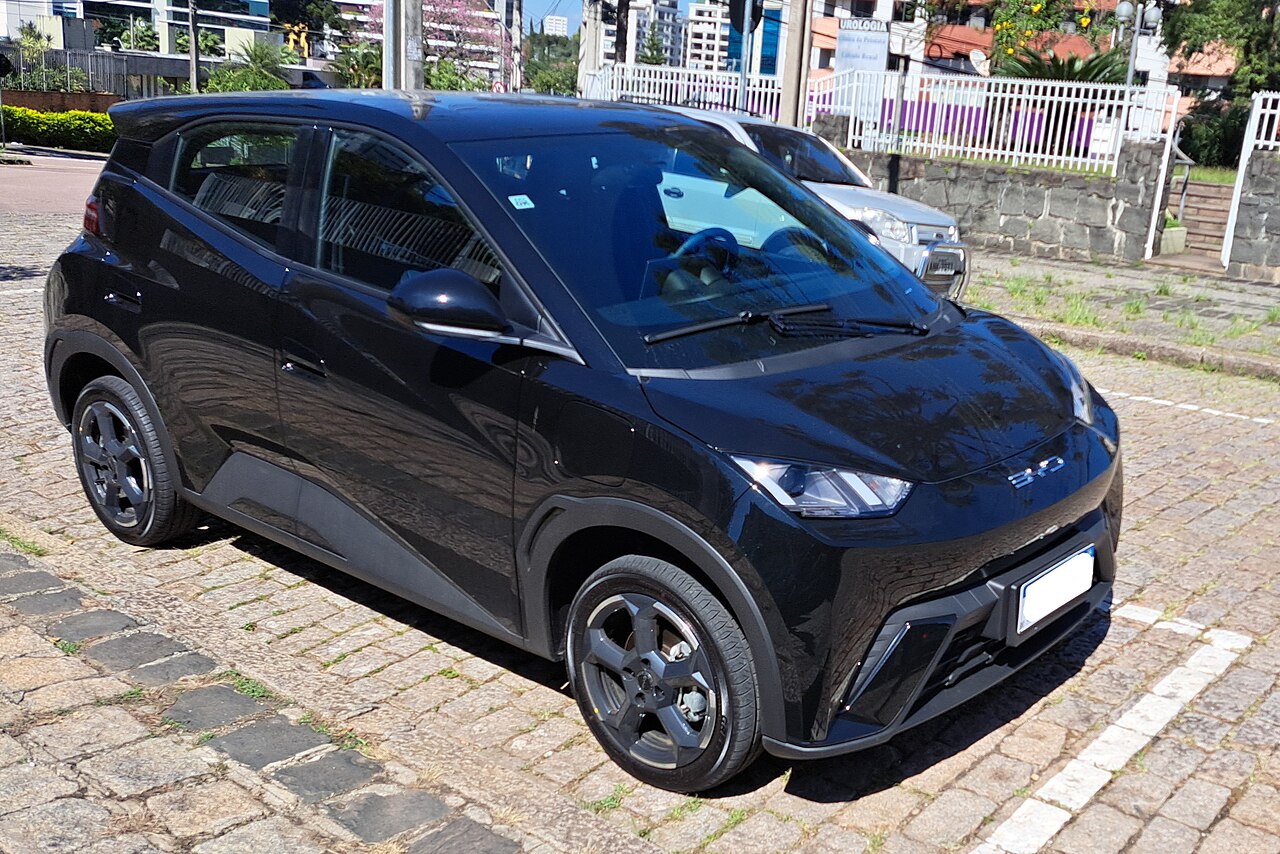
BYD reported 490,168 new-energy vehicle sales in October, its highest monthly total since December 2024 and a 10.97% increase from a year earlier. The gains were driven by overseas markets: exports climbed 102.84% to 170,194 vehicles, while sales in China fell 10.57% to 319,974. More than one-third of the month’s sales were exports. BYD has ordered 10 ships to strengthen its export logistics. In Spain, the Seal U DM-i had become the country’s second-best-selling plug-in hybrid, and a full refresh was planned for late November.
The mix of powertrains shifted further toward battery-electric cars. BYD sold 305,743 all-electric passenger cars, up 37.38% year on year and 11.94% from September, marking a third consecutive monthly record. Plug-in hybrid sales moved the other way, falling 17.23% year on year to 177,382; that was also a 3.37% decline from September and the second consecutive annual drop. The gap between the two technologies widened to 128,361 cars. Battery-electric models accounted for 63.28% of BYD’s new-energy passenger-car sales, compared with 50.95% a year earlier.
Despite October’s rise, BYD remained below its prior-year pace for the first 10 months: 3.62 million new-energy vehicles, down 2.16%. Battery-electric sales reached 1.94 million, up 5.86%, while plug-in hybrids totaled 1.63 million, down 11.02%. The Yuan was the leading model family, followed by the Sea Lion, Song and Dolphin. Among Chinese peers, Geely Auto sold 214,996 vehicles and Leapmotor delivered 106,127, up 50.99%.