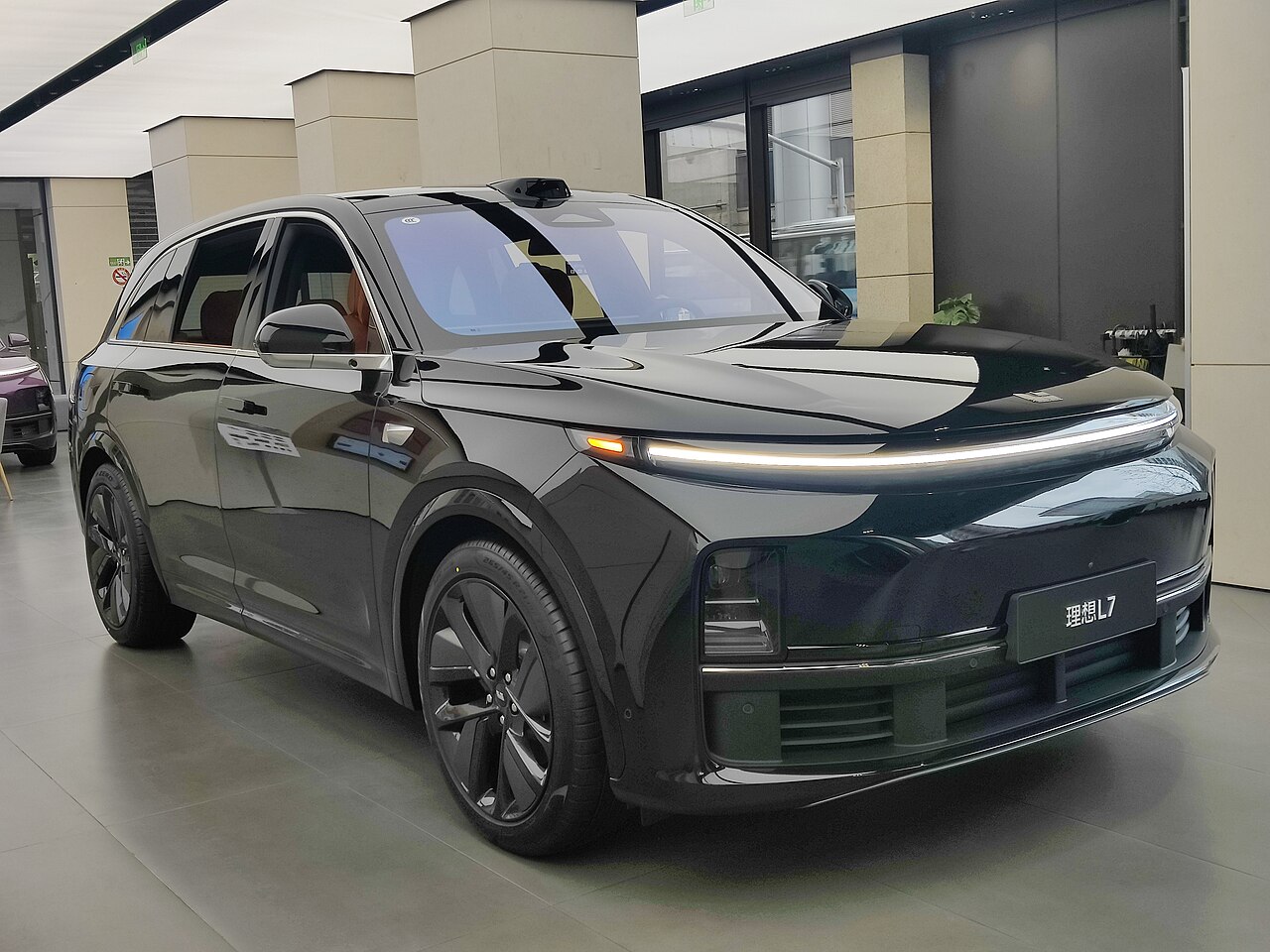
Li Auto launched its new flagship battery electric SUV, the Li i9, on September 16 as a six-seater sold in a single Home trim at 369,800 yuan (about $54,680) nationwide. Sitting 30,000 yuan above the i8 all-wheel-drive performance version, the i9 is the first flagship model on the company's second-generation dedicated EV platform and costs only around 8.8% more than the smaller SUV's top variant.
Space is the core pitch. At 5,225 mm long with a 3,168 mm wheelbase, the i9 is the largest SUV Li Auto has ever built, and it comes standard with four zero-gravity seats plus power-swiveling second-row seats that let rear passengers sit face-to-face. It is only the second Li Auto model with a Home trim after the Mega MPV. Power comes from a 101-kWh ternary lithium pack supporting 5C charging, good for 705 km of CLTC range, with 10 minutes of charging adding 500 km — slightly less range than i8 variants, underscoring that comfort, not range, is the differentiator.
A 400 kW dual-motor AWD system delivers a 0-100 km/h time of 4.9 seconds, while dual-chamber air suspension, steer-by-wire and rear-wheel steering are standard, cutting the turning diameter to 10.6 meters. Driver assistance runs on Li Auto's in-house Mach M100 chip with a forward LiDAR and the Mach VLA model, and a 30,000-yuan package adds a second chip plus side and rear sensors. Inside, a Snapdragon 8797 powers a 29-inch 6K panoramic display and a sliding 21-inch 4K rear screen.
The launch carries financial weight for Li Auto, whose Q2 vehicle margin slid to 9.4% alongside a 1.7 billion yuan net loss; management expects BEVs to claim a bigger share of sales in the second half. August deliveries rose 32.07% year-on-year to 37,679 units, though the year-to-date total of 261,619 remains slightly down. The i9 joins the Mega, i8 and i6 in the BEV lineup and, alongside a new Mega, will gradually shift from CATL cells to in-house batteries.