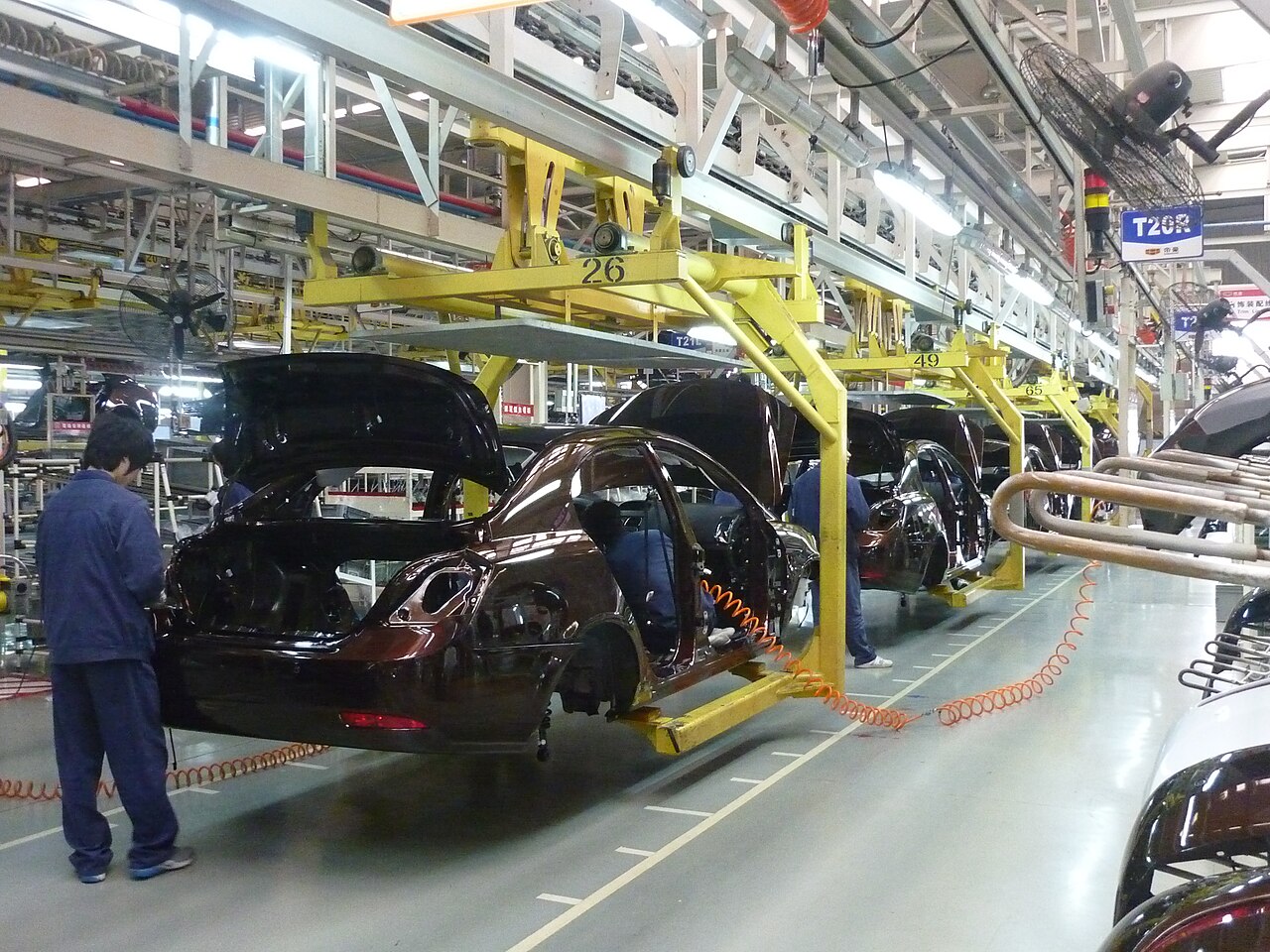
Chinese automakers including BYD, Geely and Nio can take a new car from initial design to production in roughly 18 to 24 months, compared with 40 to 48 months for traditional European manufacturers, according to the article. The shift comes amid a broader change in automotive production: Europe’s share of global output has fallen from about 30% in the early 2000s to around 15%, while China’s has risen from roughly 5% to more than 35%, particularly since the pandemic.
The article attributes China’s pace to more than labor costs or government support. It points to the use of LFP batteries, cell-to-pack construction and vehicles designed around the battery from the outset. Chinese companies also benefit from a closely integrated supply chain, spanning battery materials and processing through to in-house battery production. Their development processes make greater use of computer simulations, while European firms more often rely on sequential engineering stages and physical prototype testing.
The faster development process accompanies production costs reported to be 20% to 40% lower. In response, European automakers are restructuring and aiming to cut costs by 30% to 50% without visibly reducing product quality. Measures discussed include integrating battery cells into the chassis, limiting the number of vehicle configurations and generating software revenue through subscriptions. The article presents these steps as part of Europe’s effort to stay competitive as Chinese brands expand.