Chery maps out route to 2027 vehicle testing for 400 Wh/kg solid-state battery
Chairman Yin Tongyue says semi-solid Rhino packs go into cars this quarter, with all-solid-state cells entering vehicle-level validation next year as the industry converges on 2027.
2026-09-03
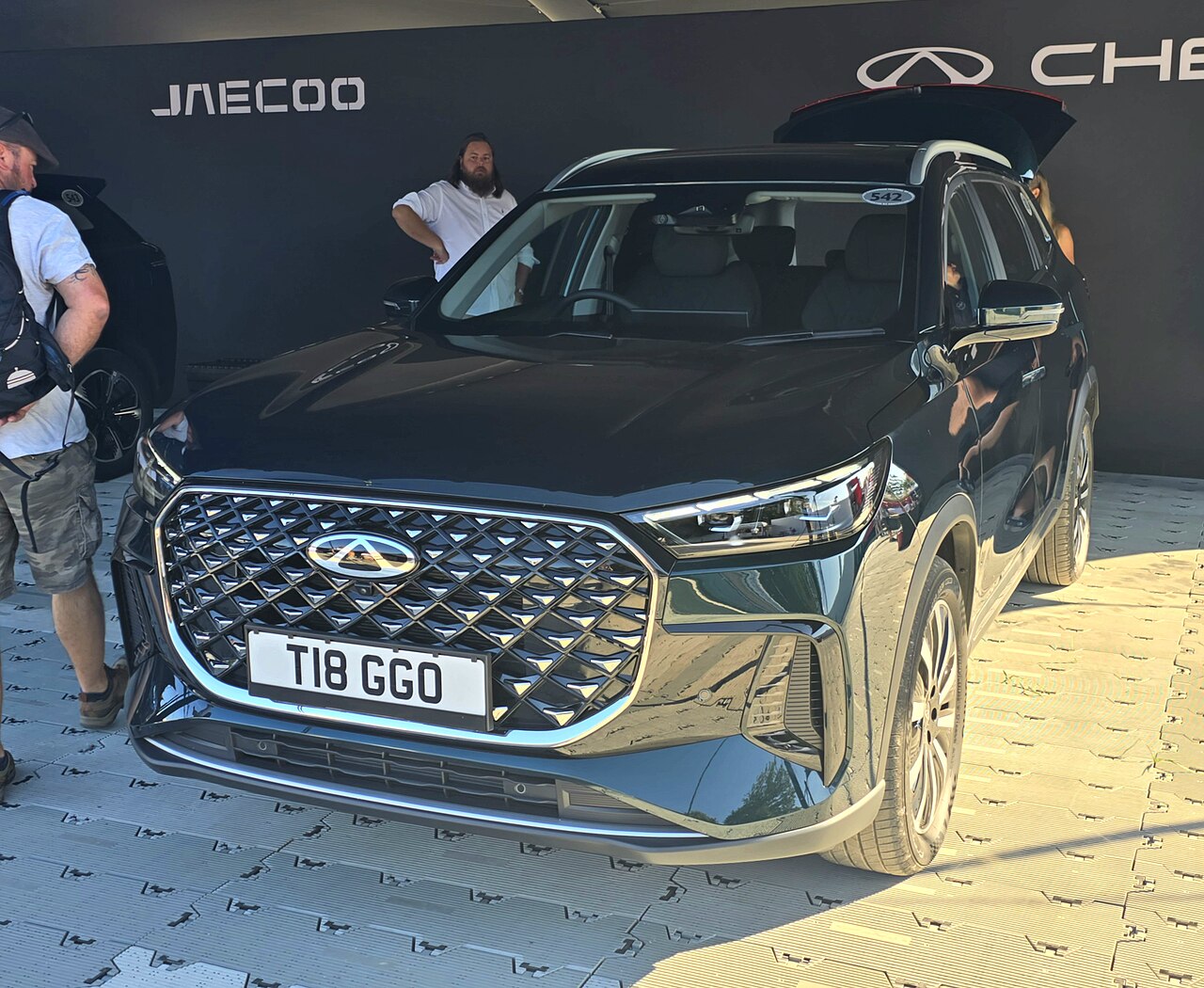
Wikimedia Commons
Speaking at the 2026 World Power Battery Conference in Yibin, Sichuan, Chery chairman Yin Tongyue laid out a two-step battery roadmap: the solid-liquid hybrid version of the company's Rhino Battery line will be fitted to vehicles in the fourth quarter of 2026, while all-solid-state cells move into vehicle validation in 2027.
Chery's solid-state cells have reached an energy density of 400 Wh/kg. When the roadmap was first detailed in March, the Rhino S family included a 60-Ah cell built on a sulfide solid electrolyte and a high-nickel ternary cathode, alongside a polymer-based variant rated at 600 Wh/kg that Chery said could enable driving ranges beyond 1,500 km.
Chery is far from alone in eyeing 2027. CATL and BYD both plan small-volume in-vehicle deployment of all-solid-state batteries that year, Geely expects to complete its first in-house solid-state pack in 2026, and Dongfeng aims to deliver 50,000 solid-state-equipped vehicles in 2027. Mass production still faces cost, reliability, and yield hurdles — CATL chairman Robin Zeng said in June that the technology sits at only level 4 on his 1-to-9 maturity scale.
Yin stressed that no Chery battery technology will reach cars before clearing safety requirements; the Rhino pack carries a "360-degree safety protection system" and must survive high-temperature, extreme-cold, crash, underbody-scrape, and immersion testing. He also projected China's 2026 vehicle exports topping 10 million units with NEVs accounting for more than half, and urged Chinese automakers expanding abroad to prioritize localized operations over short-term sales.
This is an original summary compiled and translated from the source below, not a direct translation of it.
🔗 Source: CnEVPost →