Dealer blames kicked-away power bank for Lynk & Co 900 fire in Hangzhou
The dealership insists the plug-in hybrid's traction battery did not ignite, but no telemetry or forensic data backs that up, and the official cause remains undetermined.
2026-09-13
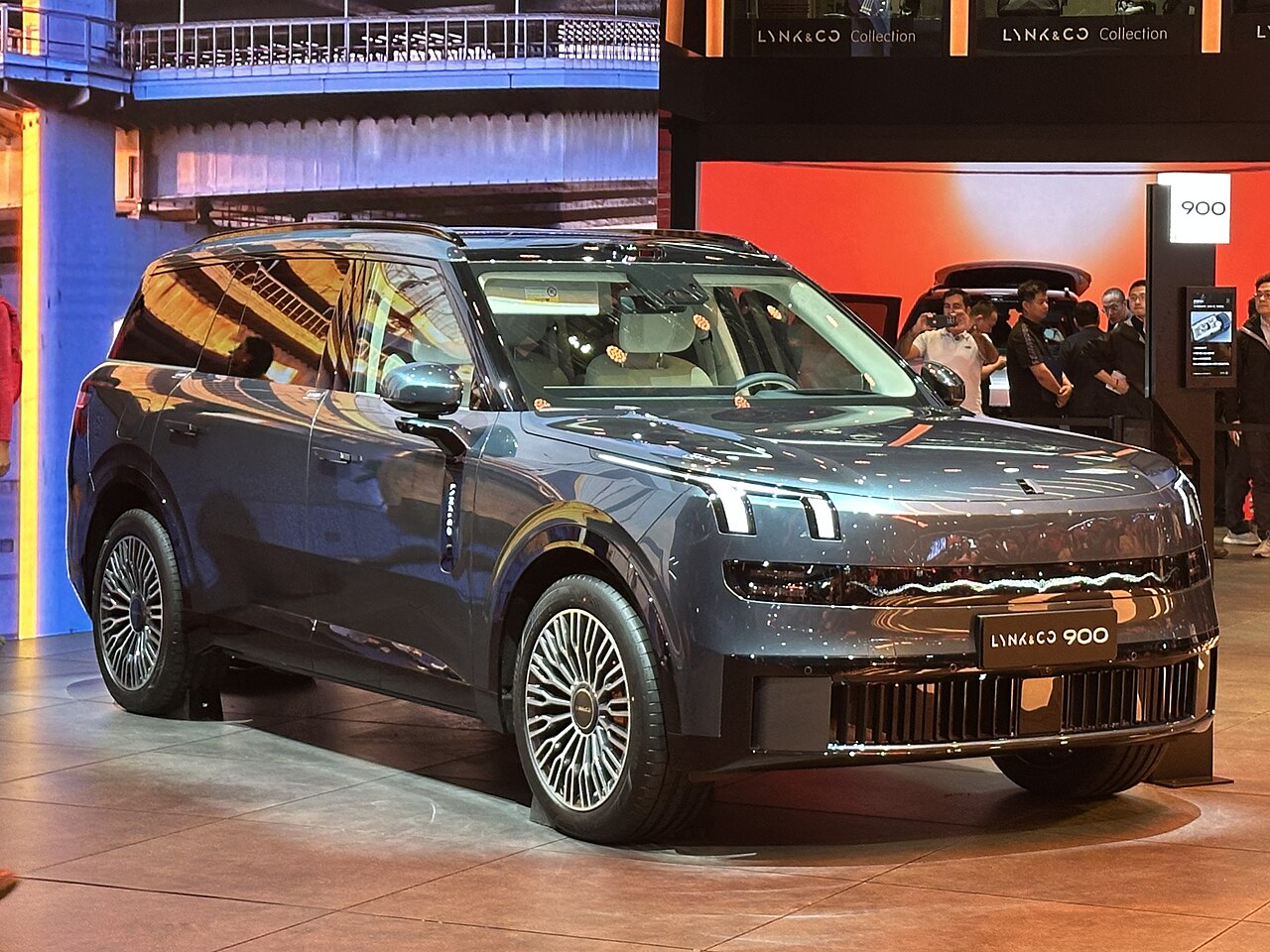
Wikimedia Commons
A Lynk & Co 900 plug-in hybrid caught fire while parked on a commercial street in Hangzhou on the afternoon of September 9, 2026. Onlooker video shows smoke and localized flames coming from beneath the SUV, which passersby initially attacked with a portable extinguisher before firefighters finished the job. The footage does not settle whether the traction battery was involved.
The following day, the Hangzhou Lingyue Lynk & Co Centre said in a statement that, per the owner, a passerby had dropped a portable power bank that was then kicked under the vehicle and ignited. The dealership rejected any suggestion of a high-voltage battery fire, while noting the final verdict must await the official fire accident certificate. With no battery telemetry, thermal data, or forensic findings released, the power-bank account remains a one-sided claim.
The 900 is Lynk & Co's three-row flagship PHEV, introduced in 2025 on Geely's SPA Evo platform, with a five-seat two-row version added in April. It comes with either a 44.9 kWh pack supplied by CALB or a 52.4 kWh unit using CATL's Freevoy hybrid cells. The battery sits in its own protective housing beneath the floor alongside non-metallic aerodynamic covers and splash shields, so an external flame could in principle burn surrounding materials without triggering thermal runaway inside the pack — though nothing yet confirms that scenario.
For perspective, an ordinary 10,000 mAh power bank holds roughly 0.037 kWh, a small fraction of the SUV's 40-plus kWh traction battery, and capacity alone does not decide whether an external lithium-ion device can start or sustain a fire. China's updated GB 38031-2025 mandatory battery safety standard took effect on July 1, 2026, but passing type approval does not identify an ignition source in a specific case. Municipal investigators must still determine whether the battery, an external object, underbody components, or something else set the vehicle alight.
This is an original summary compiled and translated from the source below, not a direct translation of it.
🔗 Source: CarNewsChina →