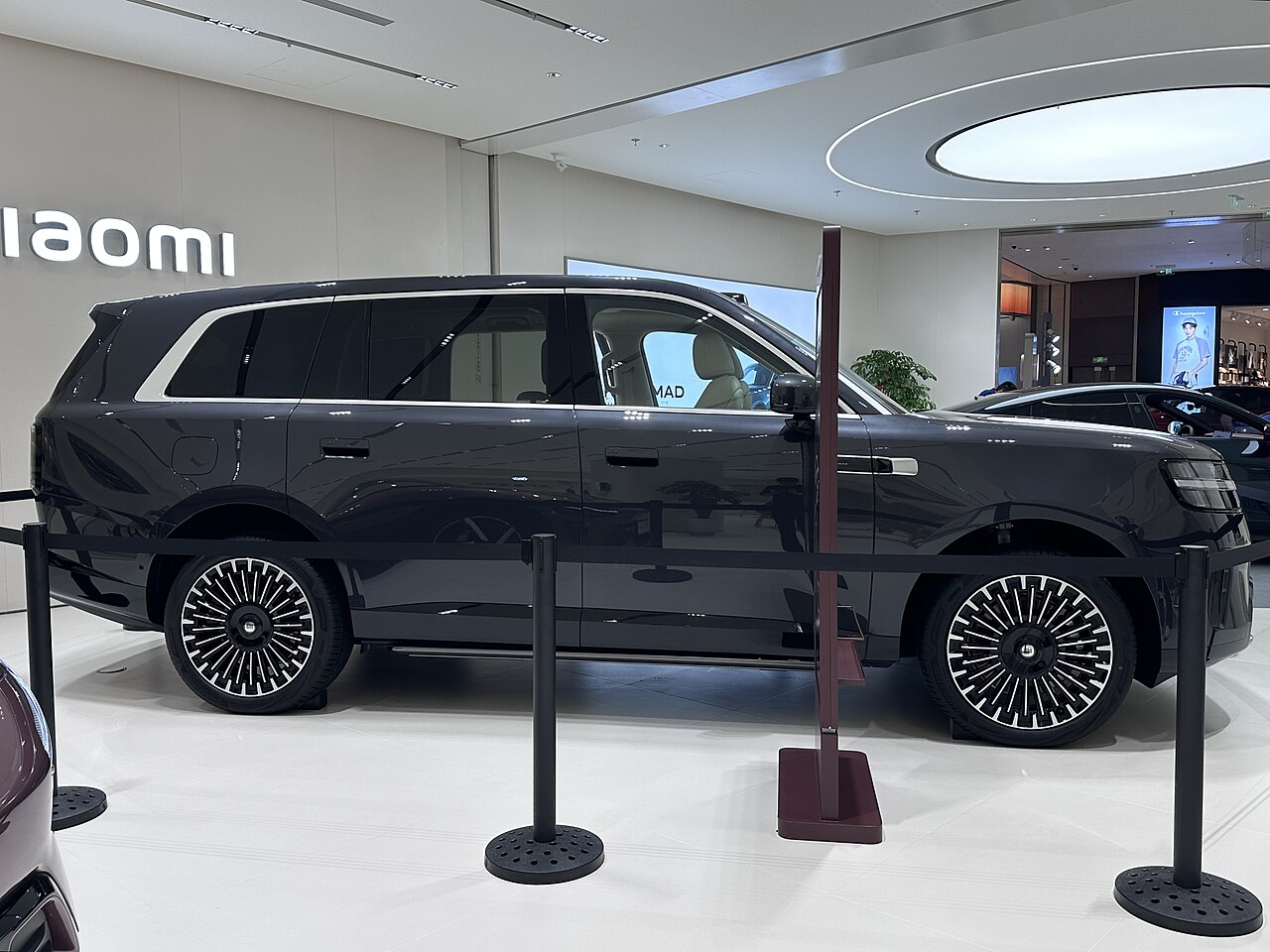
Xiaomi's third automotive product line went on sale on the evening of September 7 under the Pengcheng name: the five-seat extended-range N70 (Pro and Max) and the seven-seat N90 (Max and Max Exploration), priced between RMB 209,900 and 299,900. All four are built on the Kunlun architecture, a platform Xiaomi quietly started developing in early 2023 with a brief far removed from the SU7 — combining SUV driving manners with the flexible, cavernous layout of a motor home. Both Max trims undercut their pre-sale prices by RMB 20,000 and 30,000 respectively, and launch perks reach RMB 81,000 in value on the N90 Max.
The design intent shows in the hardware. The N70 flattens the floor and hides five slide rails beneath it, letting the second row travel back far enough to free up a full bay for camping gear. The N90 Exploration adds 1.7 square meters of wooden flooring with three-level floor heating up to 38°C, plus a pop-up roof that splits the cabin into two levels with 2.29 meters of standing height and folds into a bed in 30 seconds. At 5.28 meters long with a 3,080 mm wheelbase, the N90 is flagship-sized, but Xiaomi deliberately shifted budget away from conventional flagship hardware toward features that matter once the car stops. Lei Jun also admitted costs could not support a sub-RMB 200,000 entry point, so the base standard trim was shelved.
The timing matters: August 2026 passenger-car retail fell nearly 20% year on year to 1.626 million units, and the extended-range segment is shrinking too. Xiaomi's pitch targets the customers who bought its phones years ago and now have children and aging parents — the launch staged scenes like feeding a baby, homework in the second row and a dog stretched out on the flat floor. Against the new-generation Li Auto L9 (from RMB 459,800), AITO M9 EREV (from RMB 479,800), Onvo L90 (around RMB 260,000), Deepal S09 (from RMB 239,900) and Leapmotor D19 (from RMB 219,900), the N90 Max at RMB 269,900 reads as strong value.
The event leaned heavily on self-verification: a battery that endured wading after a bottom impact and a nail-penetration test at 55°C fully charged, a 14-ton roof-crush figure with VP Li Xiaoshuang standing on the roof, and a 1,230 km Shanghai-to-Beijing range run for the N90 Max repeated in the opposite direction after online skeptics called the route downhill. Smart driving drew barely a mention beyond the claim of using the most expensive chip available. The article's takeaway: Xiaomi is wagering that a car that feels like a livable room will pull house-time inside it — a bet the market has yet to confirm.