Xpeng's humanoid robot Iron to run on semi-solid batteries after all-solid-state plans stall
The automaker reportedly picked a high-energy solid-liquid hybrid cell from a second-tier Chinese supplier after all-solid-state options from BYD, Gotion, CALB and Eve Energy fell short, with Iron mass production still targeted for year-end.
2026-09-03
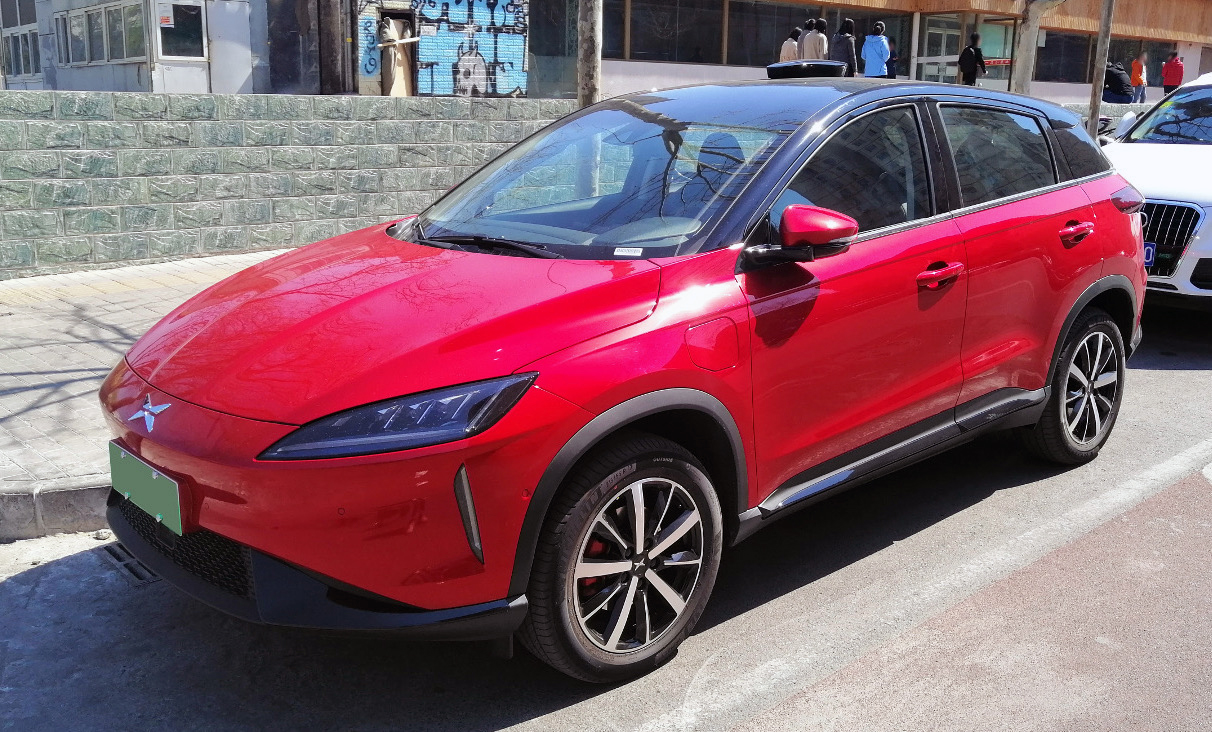
Wikimedia Commons
Xpeng has reportedly settled on semi-solid — solid-liquid hybrid — batteries for the production version of its Iron humanoid robot, stepping back from the all-solid-state strategy it unveiled at AI Day in November 2025. The unannounced change, reported by Jipian Lab, reflects the slower-than-hoped industrialization of all-solid-state cells and a bid to de-risk supply ahead of mass production slated for the end of 2026.
Xpeng had approached BYD, Gotion High-tech, CALB and Eve Energy for all-solid-state products, but none met its installation requirements. It has now chosen a second-tier Chinese battery maker as its primary supplier while continuing to test samples from other firms. The selected cells are high-energy solid-liquid hybrid pouch units rather than cylindrical ones, offering higher energy density and better safety than conventional alternatives — though they still need validation across materials, manufacturing processes and consistency. CATL chairman Robin Zeng said in June that solid-state technology sat only at level 4 on a 1-to-9 mass-production readiness scale.
Iron remains on track to enter mass production by the end of 2026, initially deployed in Xpeng's stores and industrial parks, before going on sale in 2027 to retail and service-sector customers at home and abroad. Monthly capacity could reach several thousand units depending on demand. Xpeng's robotics arm, Dogotix, recently raised more than $900 million at a post-money valuation above $6.3 billion — roughly 59 percent of Xpeng's approximately $10.6 billion market value as of September 2.
Robots, being less cost-sensitive than cars yet more demanding on weight, energy density and safety, could serve as early proving grounds for advanced batteries. But they won't generate big orders soon: GGII data cited in the report puts global humanoid sales near 340,000 units in 2030, implying no more than 0.68 GWh of battery demand — about what 11,000 EVs with 60-kWh packs would use.
This is an original summary compiled and translated from the source below, not a direct translation of it.
🔗 Source: CnEVPost →