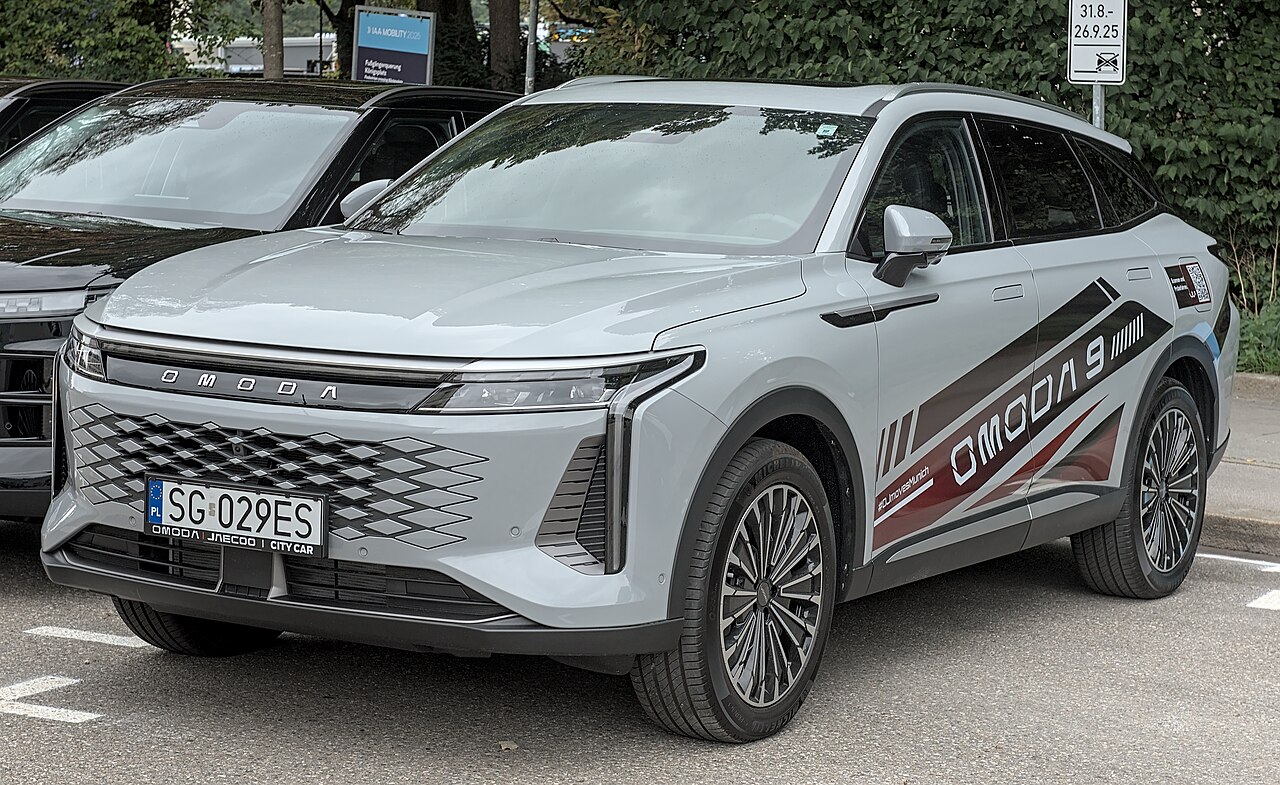
Omoda & Jaecoo plans to introduce flex-fuel hybrid technology in Brazil in 2027, with the Omoda 4 expected to be the first model to use it. The compact SUV’s Brazilian arrival has shifted to the second half of 2027, and the company has not yet specified whether the broader technology rollout will begin earlier or later in the year.
The Omoda 4 will use a full-hybrid setup that does not require charging from an external power source. Its 1.5-liter turbocharged four-cylinder engine works with two electric motors to produce a combined 224 hp and 30 kgfm of torque. A 1.83-kWh battery captures energy during braking and deceleration, while the flex-fuel system is designed to run on pure ethanol. The article cites an estimated highway figure of 19 km/l for the European gasoline version, not the Brazilian flex model.
The SUV was initially expected to be built in Brazil, but talks concerning the purchase of Jaguar Land Rover’s Itatiaia plant in Rio de Janeiro state did not conclude. With domestic production on hold in the near term, Omoda will import the vehicle, which is expected to arrive with more equipment and a higher-level hybrid system than originally planned. Test vehicles are already undergoing climate adaptation and fluid-calibration work on Brazilian roads. Prices are now forecast at R$140,000–R$150,000, up from an initial target near R$130,000.
Based on the T1X platform, the Omoda 4 has a 2.70-meter wheelbase and a 400-liter trunk. It measures 4.42 meters long, 1.86 meters wide and 1.57 meters tall. The cabin is centered on an 8.8-inch instrument display and a 13.2-inch multimedia screen; the company has not confirmed whether a panoramic roof or the full ADAS suite will be standard across Brazilian versions. The Jaecoo 7 and Omoda 7 are also due to receive flex-fuel plug-in hybrid systems, while Lepas is slated to enter Brazil with flex-fuel HEV and PHEV options.